Bird & Bat Monitoring for Wind Power Projects | Wildtour
Location: Vietnam
Sponsor(s): Many organizations (e.g., ADB, World Bank)
Year: Since 2017
Partner(s): ERM, UPC, AFC, AFD, etc…
Wildtour designs and implements operational-phase bird and bat monitoring for wind-energy projects in Vietnam, including flight-activity surveys, behavioural observations, systematic carcass searches, and acoustic bat monitoring where appropriate. Results support collision-mortality estimates, mitigation review, and adaptive management.
Background
Wind power is a fairly new technology to Viet Nam; however, it is one of the fastest-growing renewable energy sources. In recent years, numerous wind farm projects have been built, and more are planned throughout Viet Nam, especially along the coastal zone in the central areas from Binh Dinh to Phan Thiet provinces and the coastal zone in the Mekong Delta. Operational wind farms may have adverse effects on biodiversity, especially birds and bats, including:
- Death through collision or interaction with turbine blades;
- Direct habitat loss through construction of wind power project infrastructure; and
- Displacement through indirect loss of habitat if birds and bats avoid the wind power project area and its surrounding area due to turbine operation and maintenance/ visitor disturbance. Displacement can include barrier effects in which birds and bats are deterred from using normal routes to feeding or roosting grounds.
To assess and monitor the potential impacts of wind farm operations on birds and bats, our monitoring program is designed to document species diversity, abundance, and activity patterns; evaluate collision risk and other operational impacts; and inform the implementation of effective mitigation measures that minimize wildlife mortality while supporting the sustainable development of renewable energy.
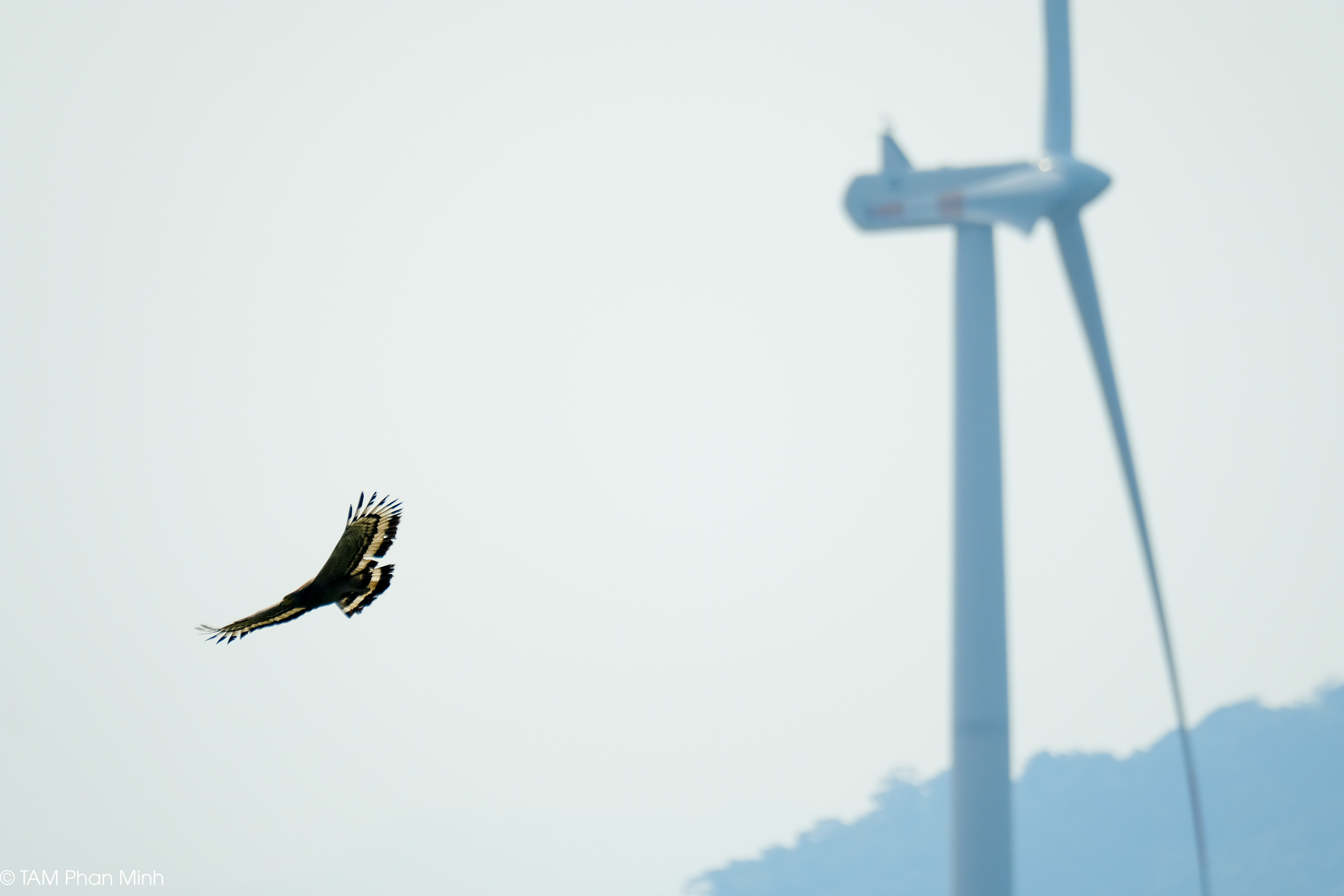
The Crested Serpent Eagle soaring around the wind turbines
During the operational phase, monitoring focuses on quantifying the actual impacts of wind turbines on birds and bats through regular flight activity surveys, behavioral observations, systematic carcass searches beneath turbines, and acoustic monitoring of bat activity where appropriate. The findings are used to estimate collision mortality, evaluate the effectiveness of mitigation measures, identify temporal and spatial patterns of collision risk, and support adaptive management strategies to further reduce wildlife impacts throughout the operational life of the wind farm.
ESIA Consultant
Mekong shorebirds, wind energy surveys and Tram Chim conservation
Use this area to feature selected projects with photos, partner logos, key results and links to full project pages.