Bach Ma National Park Birding Site | Wildtour Vietnam
Summary
Bach Ma National Park rises from lowland forest near the central Vietnamese coast to montane evergreen forest above 1,200 m, creating a strong elevational gradient within a compact area. This variety of habitat supports a rich forest avifauna and makes Bach Ma one of the most rewarding central Vietnam sites for combining galliforms, hornbills, pittas, broadbills and montane passerines.
Crested Argus is perhaps the park's best-known speciality, although it is much more often heard than seen. Other important targets include Annam and Rufous-throated Partridges, Silver Pheasant, Red-collared Woodpecker, Brown Hornbill, Blyth's Kingfisher, Coral-billed Ground Cuckoo, Blue-rumped and Bar-bellied Pittas, Ratchet-tailed Treepie and a wide range of babblers and laughingthrushes. Birding can be done from the summit road and trails such as the Pheasant Trail and Rhododendron Trail. The park is about 40 km from Hue, and accommodation near both the entrance and summit allows birders to cover different elevations efficiently.
Click here to see the full bird checklist in Bach Ma National Park
Most highlights
Rufous-throated Partridge, Annam Partridge, Silver Pheasant, Crested Argus, Red-collared Woodpecker, Red-vented Barbet, Brown Hornbill, Red-headed Trogon, Blyth's Kingfisher, Coral-billed Ground Cuckoo, Blue-rumped Pitta, Bar-bellied Pitta, Long-tailed Broadbill, Silver-breasted Broadbill, White-winged Magpie, Indochinese Green Magpie, Ratchet-tailed Treepie, Orange-headed Thrush, Siberian Thrush, Japanese Thrush, Sultan Tit, Masked Laughingthrush, White-crested Laughingthrush, Lesser-necklaced Laughingthrush, Black-throated Laughingthrush, Short-tailed Scimitar Babbler, Grey-throated Babbler, Spot-necked Babbler, Grey-faced Tit Babbler, Black-browed Fulvetta, Fork-tailed Sunbird.
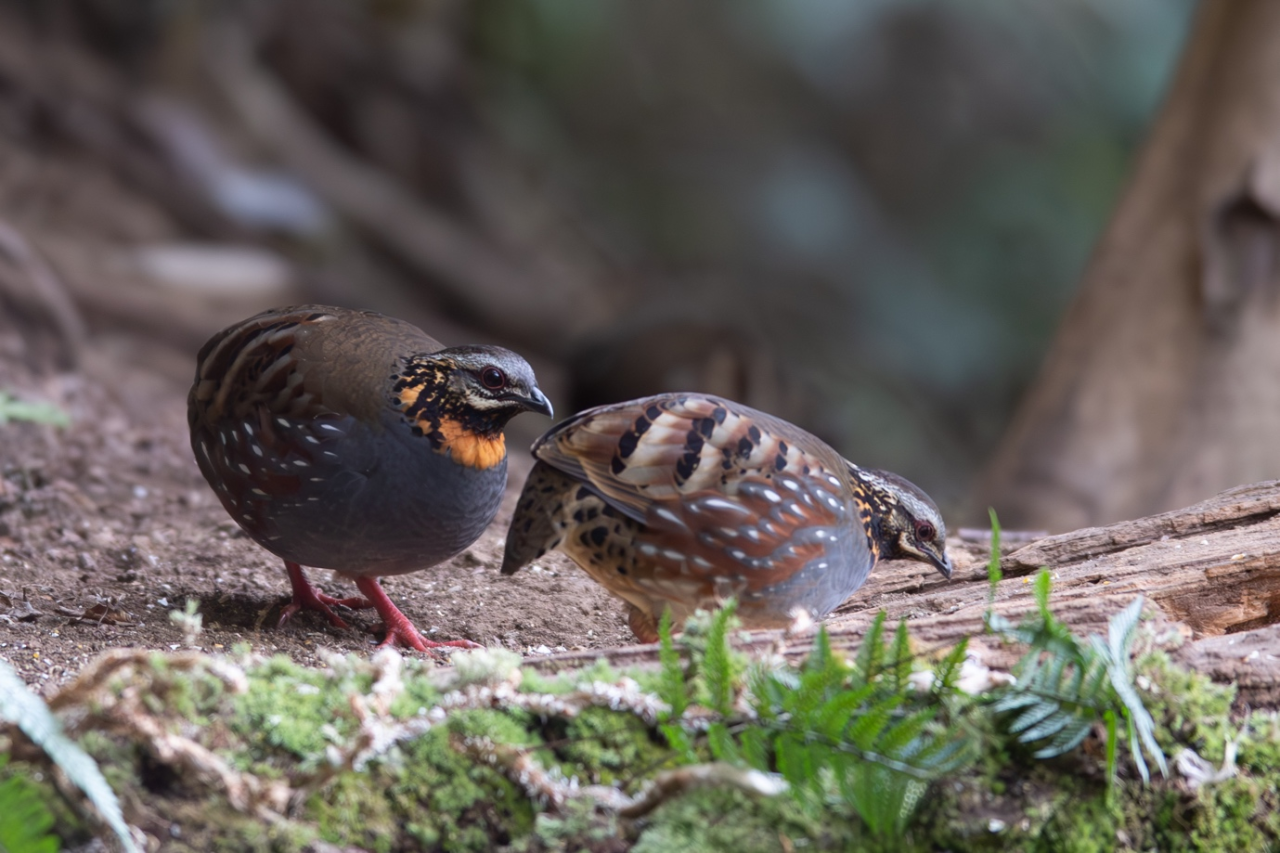
Rufous-throated Partridge in Bach Ma National Park
Birding routes
Bach Ma offers a range of trails for visitors. Each trail takes less than one day, and many small trails can be explored from the road to the summit. Visitors can get details from the park visitor centre.
Rhododendron Trail
Begins at the summit road, about 2 km below the summit, and passes through montane forest to the top of a waterfall. From there, a steep path with 689 concrete steps leads to the bottom of the cliff, 300 m below. From the bottom, visitors can retrace their steps or continue to the Five Lakes Cascade Trail.
Pheasant Trail
Starts 5 km from the park entrance and leads through lowland evergreen forest to a series of waterfalls. As the name suggests, several galliform species can be found along this trail, including, with a lot of luck, the elusive Crested Argus. Brown Hornbill and White-winged Magpie are among the other interesting species that can be seen along the Pheasant Trail, as well as the rare Blyth's Kingfisher on the river.
Good birding is also possible from the main road 2-3 km downhill from the park headquarters, past Khe Su village. This area, within the park's buffer zone, is a known site for Annam Partridge. The surfaced road from the park headquarters to the summit can also yield many species, and the area around the summit guesthouses is particularly good for Long-tailed and Silver-breasted Broadbills, Sultan Tit and Short-tailed Scimitar Babbler.
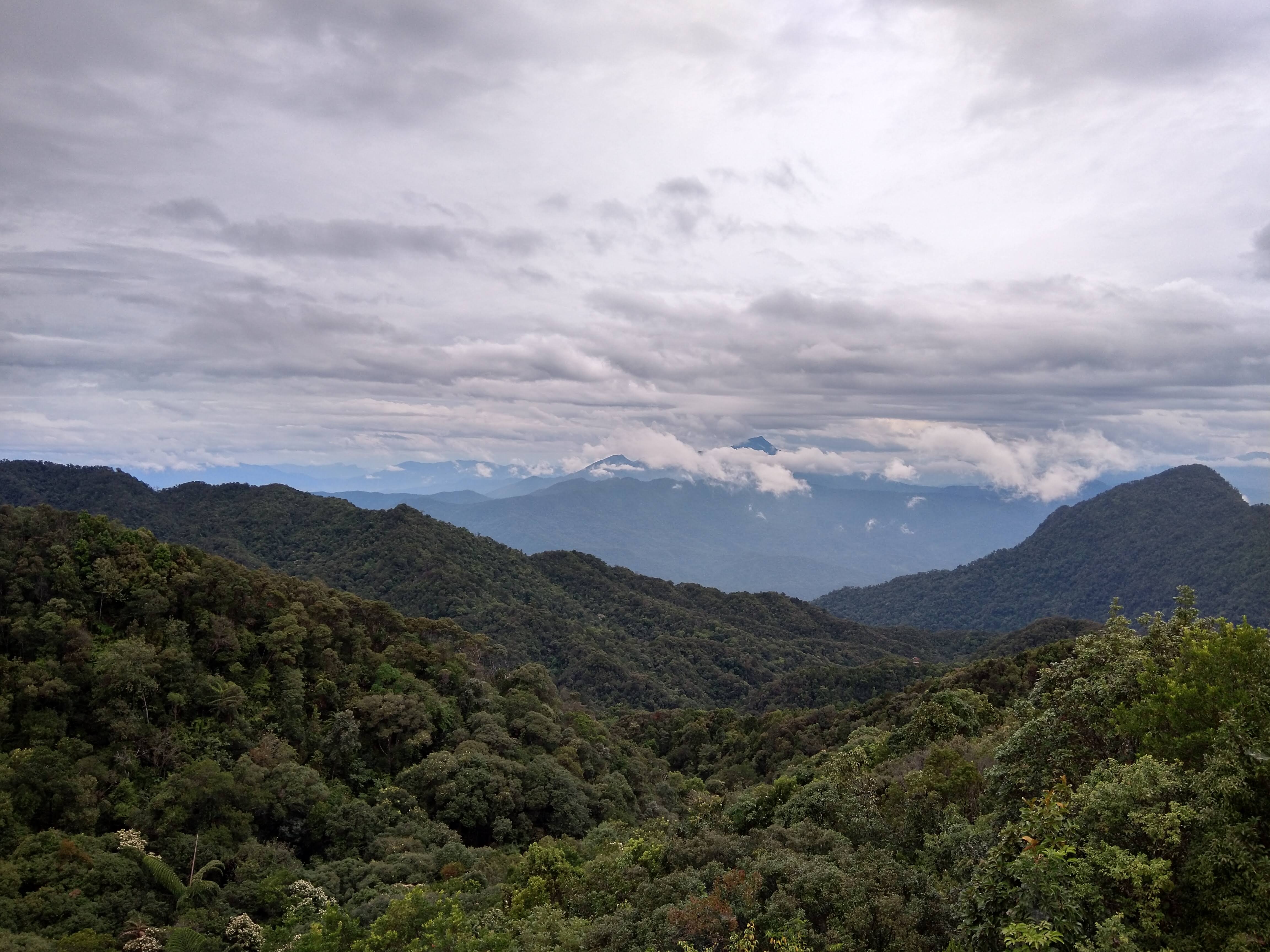
Bach Ma NP is not only a birdwatching hotspot but also a stunning landscape
Transportation
Car or motorbike. Bach Ma National Park is 40 km from Hue city, which can be reached by train, bus, or scheduled flights from Hanoi and Ho Chi Minh City. The park headquarters are located 3 km from Cau Hai town on National Highway 1A. It is easy to take a taxi or motorbike from Hue to the park headquarters, from where transport to the summit of Bach Ma Mountain, 20 km away, can be arranged.
Accommodation
Bach Ma National Park has six guesthouses. Two guesthouses, providing 10 rooms, are close to the park entrance, and four guesthouses (Bach Ma, Saola, Do Quyen and Kim Giao), with a total capacity of 26 rooms, are situated near the summit, at an altitude of 1,250 m asl.
Relevant tour
- Bach Ma National Park Birding Tour
- Central Highlands Vietnam Birding Tour
- Vietnam from South to North: A Comprehensive Birding Journey
- Southern and Central Vietnam Birding Tour
More information about the birding sites in Vietnam
- Mang Den - Kon Plong Birding Site
- Da Lat Plateau Birding Site
- Cat Tien National Park Birding Site
- Yok Don National Park Birding Site
- Tam Dao National Park Birding Site
- Sa Pa - Fansipan Mt Birding Site
- Cuc Phuong National Park Birding Site
- Lo Xo Pass Birding Site
- Bach Ma National Park Birding Site
- Sa Mu & Bac Huong Hoa Birding Site
- Phong Nha - Ke Bang National Park Birding Site
- Tan Phu Forest (Thac Mai) Birding Site
- Can Gio Mangrove Biosphere Reserve Birding Site
- Mekong Delta Birding Site