Cuc Phuong National Park Birding Site | Wildtour Vietnam
Summary
Cuc Phuong, Vietnam's oldest national park, protects extensive limestone forest about 135 km southwest of Hanoi. The forest has a distinctive karst character, with mature trees, caves, steep limestone terrain, and a rich flora. For birders, it is one of the key northern lowland and limestone sites and is particularly valuable for pittas, woodpeckers, and limestone-associated babblers.
Prime targets include Red-collared Woodpecker, Pied Falconet, Ratchet-tailed Treepie, White-winged Magpie, Limestone Wren-Babbler and three sought-after pittas: Bar-bellied, Blue-rumped and Eared. The main road from park headquarters toward Bong is productive in the early morning, while forest trails around Bong and the botanical garden provide access to denser forest species. Accommodation is available both near headquarters and deeper inside the park near Bong, allowing birders to start early. Cuc Phuong pairs naturally with Tam Dao on a northern itinerary and generally deserves at least two mornings for a realistic chance at the more secretive forest birds.
Click here to see the full bird checklist in Cuc Phuong National Park
Most highlights
Red-collared Woodpecker, Pied Falconet, Rachet-tailed Treepie, Bar-bellied, Blue-rumped and Eared Pittas, White-winged Magpie, Limestone Wren Babbler.
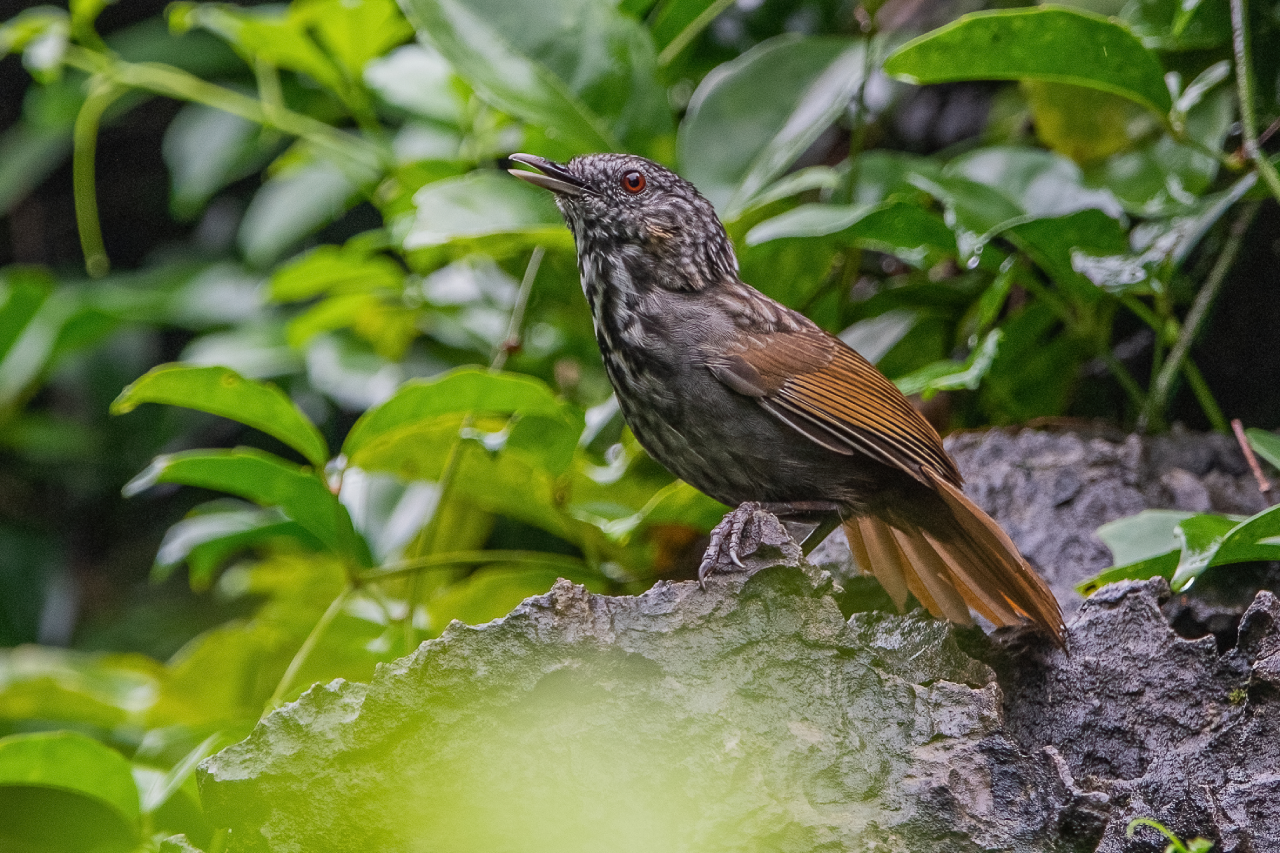
Annam Limestone Babbler is one of the priority targets in Cuc Phuong National Park
Birding routes
Main road from HQ to Bong is a range for many species; if you go through in the early morning in winter, thrushes are encountered. Malaysian Night-heron is easy to see along the road in April-July.
Forest trails around Bong, such loops trail village trails, are normally frequented by Eared Blue-rumped and bar-bellied Pittas, Pied Falconet, Red-collared Woodpecker, and Limestone Warbler normally found.
The botanical garden by the HQ gate is a good spot for White-winged Magpie, Rachet-tailed Treepie, and Blue-rumped Pitta
Transportation
Cuc Phuong National Park is located approximately 135 km from Hanoi. Traveling by car or motorbike via the main road network typically takes around 2 to 2.5 hours.
Accomodation
Visitor accommodation is available at the park headquarters and inside the national park near the Bong ranger station. The forest is accessible on foot from both locations, but some birding trails (such as the Cave of the Early Man for Limestone Wren Babbler) are only accessible by car.
Relevant tour
- Tam Dao & Cuc Phuong Bird Photography Tour
- Fansipan Birding Expedition
- 2-4 Day Birding Tour from Hanoi
- 7-Day North Vietnam Birding Tour from Hanoi
More information about the birding sites in Vietnam
- Mang Den - Kon Plong Birding Site
- Da Lat Plateau Birding Site
- Cat Tien National Park Birding Site
- Yok Don National Park Birding Site
- Tam Dao National Park Birding Site
- Sa Pa - Fansipan Mt Birding Site
- Cuc Phuong National Park Birding Site
- Lo Xo Pass Birding Site
- Bach Ma National Park Birding Site
- Sa Mu & Bac Huong Hoa Birding Site
- Phong Nha - Ke Bang National Park Birding Site
- Tan Phu Forest (Thac Mai) Birding Site
- Can Gio Mangrove Biosphere Reserve Birding Site
- Mekong Delta Birding Site